The GTA 6 cyber-leak saga centered on CyberLeek has intensified in August 2026, with a continuing stream of alleged gameplay footage circulating online. While CyberLeek frames its campaign as a protest against anti-consumer practices, the core questions for Rockstar Games and Take-Two surround the security implications, the reliability of the leaked material, and the potential impact on the timing and tone of the official GTA 6 rollout.
What is officially confirmed and verifiable
Take-Two has publicly pursued enforcement actions in response to the leaks. Reported steps include copyright takedowns of leaked material and subpoenas seeking information from Microsoft and Discord to help identify alleged infringers. These actions are part of a broader legal effort to curb unauthorized distribution of GTA 6 content.
The character of CyberLeek’s campaign is publicly framed by CyberLeek as a protest against certain industry practices. The statements issued by CyberLeek should be attributed to them and not treated as verified operational capabilities. The exact nature and source of any access to a GTA 6 build remain unverified at this time.
Why alleged playable-build access would matter
Playable Build vs. Clips: Security implications
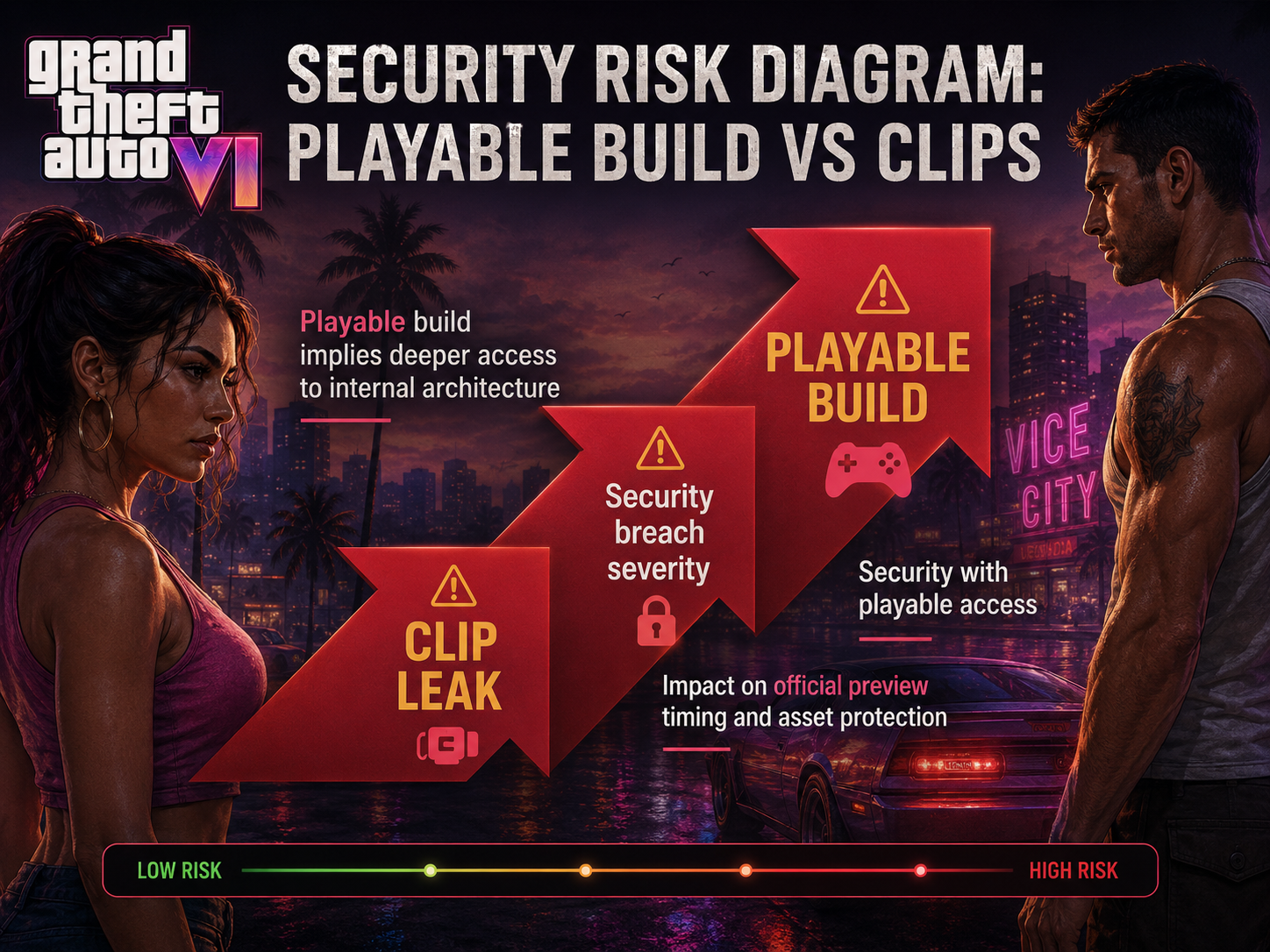
If independently confirmed, access to a truly playable GTA 6 build would represent a far larger security concern than circulating prerecorded clips. A playable build implies potential exposure of network credentials, development tools, or internal build pipelines, which could enable broader data exfiltration or more extensive disclosure beyond individual videos. The current footage references driving, flying, weapon use, and a clip that forms the word “LEEK,” but whether this points to a fully accessible playable environment or a limited test build has not been independently established.
Take-Two’s subpoenas and enforcement actions
| Detail |
|---|
| Subpoenas issued to Microsoft |
| Subpoenas issued to Discord |
| DMCA takedown requests filed |
| Outcome details not publicly disclosed |
Take-Two has moved to identify alleged infringers through subpoenas directed at Microsoft and Discord. In parallel, the company has used copyright takedowns to remove leaked material from public channels. These actions illustrate a dual track: pursuing legal avenues to deter distribution while attempting to mitigate the practical spread of unreleased content.
Rockstar/Take-Two attempts to remove leaked material and protect timing
Copyright takedowns and removal requests are part of Rockstar and Take-Two’s brand-protection playbook, aiming to preserve controlled release timing. The August 2026 window places new pressure on orchestrated reveals and extended previews, as unauthorized footage can arrive close to scheduled marketing events and diminish suspense or strategic narrative control.
How repeated leaks disrupt Rockstar’s marketing strategy
The ongoing leak cycle challenges Rockstar’s ability to guide the GTA 6 narrative arc and the cadence of official previews. Leaks arriving ahead of planned announcements can force a reordering of rollout plans, risk conveying spoilers, and complicate media briefings, partnerships, and event timing. If a playable-build claim were verified, the disruption could extend beyond content leaks to security posture and supply-chain confidence around future announcements.
Risk of story, map or gameplay spoilers before release
Spoiler risk mitigation
- Control of narrative through controlled previews
- Minimize early exposure of story/map elements
- Coordinate timing of official reveals with marketing cycles
Unauthorized material stored in the wild increases the likelihood of spoilers—whether plot beats, map layouts, or unique gameplay systems—leaking before Rockstar chooses to reveal them. Even non-confirmed footage can shape audience expectations and reduce the impact of official reveals, complicating the studio’s ability to manage surprise and narrative emphasis.
Comparison with Rockstar’s 2022 security breach
Context from the 2022 network intrusion—where a third party accessed confidential information, including early GTA 6 development footage—provides an important benchmark. That incident underscores why a sustained leak campaign remains a heightened risk for Rockstar and Take-Two when developers’ internal material resurfaces publicly. The August 2026 situation should be read against that history without treating it as a direct continuation of the same breach.
What could happen next
Near-term developments may include continued takedowns, more subpoenas or legal filings, and new allegations from CyberLeek. If any claim of a playable build is independently verified, Rockstar and Take-Two could accelerate security reviews, tighten access controls, and adjust the timing of future official previews to protect narrative control and minimize spoilers. Ongoing leaks also keep pressure on marketing teams to align messaging with a shifting information landscape.