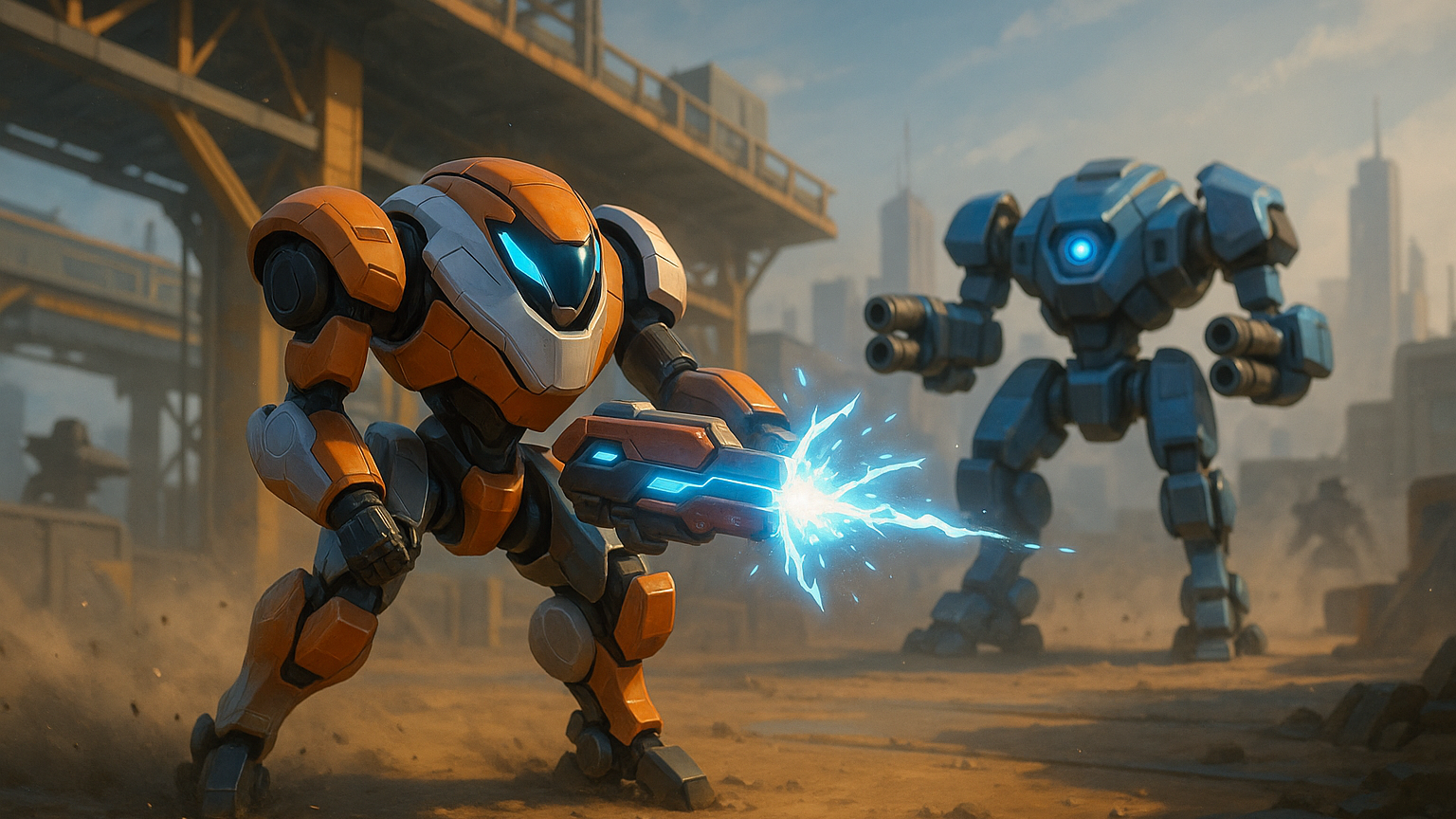
Mech Arena rewards steady progression and thoughtful loadouts more than single-item power. In 2026, a smart player builds around how a weapon fits a mech’s role, how a pilot’s bonuses amplify that choice, and how resources are allocated as you move from starter gear to more specialized setups. Bouncecutter 8 is a notable milestone, but its value comes from the surrounding synergy—how you pair it with your chosen mech, your pilot’s bonuses, and your upgrade plan.
This guide focuses on practical, progression-first decisions. It explains why you should not judge a weapon or a mech in isolation, outlines where Bouncecutter 8 fits in your growth curve, and provides early- to mid-game builds that maximize reliability and resource efficiency rather than chasing peak power. A Respawn Daily Synergy Score (1–5) is included for selected combinations, along with compact verdicts on whether to invest now, later, or hold resources.
How Mech Arena synergy works
Synergy Wheel: Mech → Weapon → Pilot
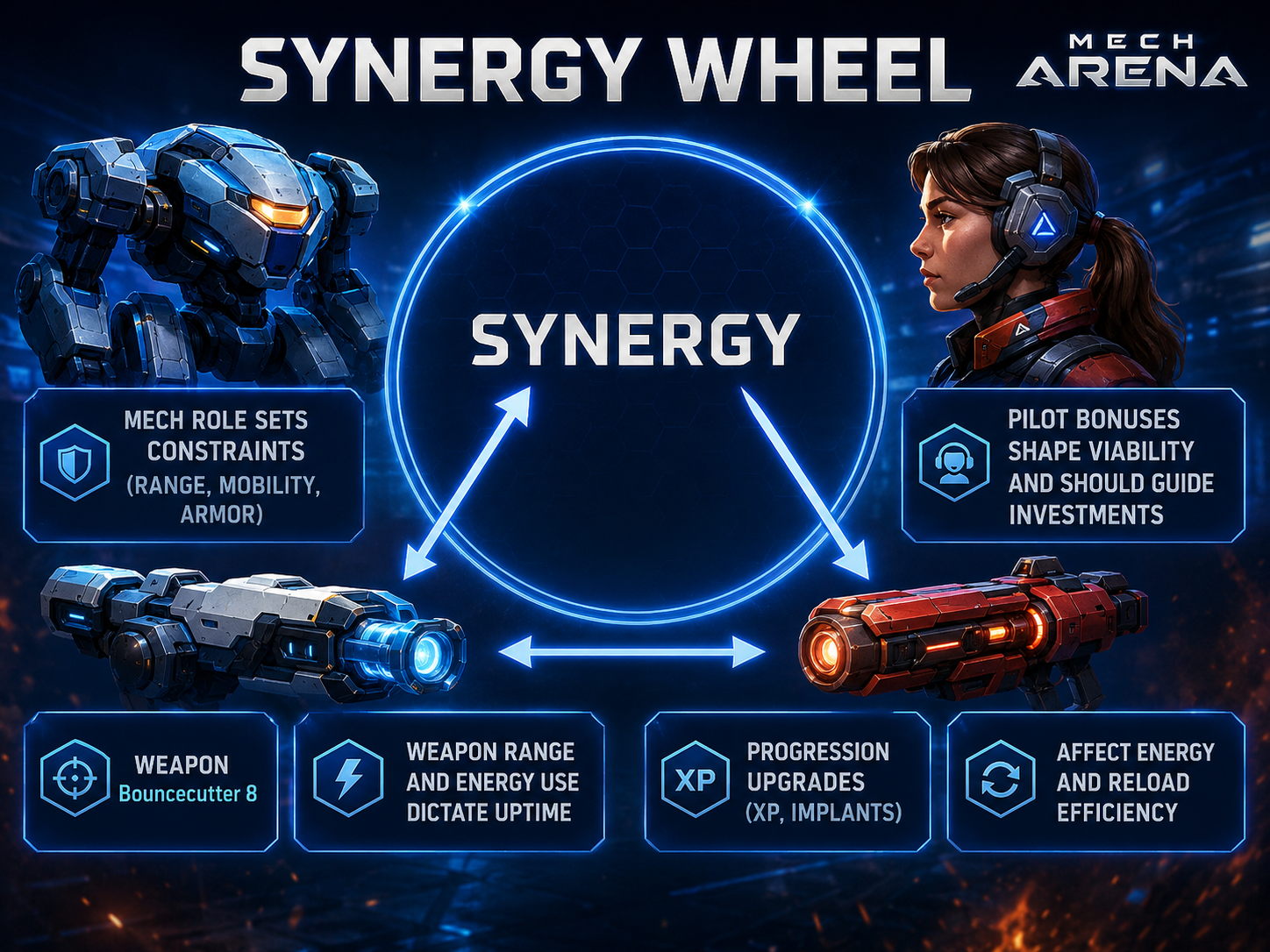
Synergy in Mech Arena rests on four interconnected factors: weapon range and handling, energy capacity and economy, the mech’s role, and the pilot’s bonuses. A long-range rifle that consumes lots of energy is most effective on a mech built for sustained engagement with energy-efficient systems. A close-range shotgun, meanwhile, benefits from a mech with sturdy mobility and a pilot that rewards aggressive pressure. When these elements align, you gain consistent uptime, safer engagements, and a clearer path to resource-efficient upgrades.
Common mistakes happen when players evaluate components separately. A weapon’s raw DPS can look impressive, but if your energy pool is too small to sustain firing, your damage window shrinks. A strong pilot bonus may seem appealing, but if the mech’s role requires mobility or shield uptime that the weapon doesn’t support, you’ll miss opportunities. The goal is to choose a kit where the weapon’s engagement envelope matches the mech’s movement, the pilot’s bonuses, and the playstyle you’re developing.
Bouncecutter 8: where it fits in your progression
Bouncecutter 8 represents a mid-layer upgrade in many playthroughs. It typically slots into builds that can leverage its compact engagement window and reload cadence, while not demanding excessive energy to sustain. The decision to invest should consider your current mech type, your pilot bonuses, and how soon you anticipate needing higher versatility or burst at mid-game milestones.
verified Pilot and Mech considerations focus on current game information. For example, a pilot that enhances close-quarters or high-velocity engagements can amplify Bouncecutter 8’s effectiveness, while a sturdy frontline mech can provide the durability to sustain pressure. The guide avoids speculative numbers and sticks to established roles and upgrade logic.
When to invest in Bouncecutter 8 makes sense: early-mid progression where you can exploit reliable close-to-mid-range pressure, combined with pilots that reward aggressive but controlled firing. When to save resources: if your current setup already meets your immediate engagement needs, or if you’re still building core roles (e.g., establishing a reliable ranged or sustained-damage path) and Bouncecutter 8’s flexibility isn’t yet maximized by your pilot/mech choices.
Early-game builds (accessible and progression-first)
| Detail |
|---|
| Nova: aggressive skirmish commands |
| Archangel: defensive control and sustain |
| What changes in energy use, reload cadence, and implant slots |
Goal: establish reliable, upgrade-friendly setups that unlock steady progression without overextending resources. Suggested approaches emphasize accessibility, energy efficiency, and compatibility with trainers or starter implants.
- Build A: Bouncecutter 8 on a compact, agile frontliner with a pilot that rewards aggressive skirmishing. The focus is on high uptime in mid-range, using energy-efficient subsystems to sustain activity.
- Build B: Bouncecutter 8 paired with a support or control mech that benefits from sustained pressure at mid-range. Pilots that boost accuracy or reload efficiency help maximize value.
Resource priority: prioritize upgrades that increase energy efficiency, accuracy, and reload speed over raw damage output. This improves progression velocity as you unlock more specialized gear.
Mid-game builds (transition to specialized setups)
| Detail |
|---|
| Identify primary role |
| Choose mech+pilot synergy |
| Evaluate synergy payoff per upgrade |
| Monitor Synergy Score (1–5) |
As you move beyond starter loadouts, shift toward focused roles and smarter resource use. The goal is to reallocate XP and implants toward items that complement Bouncecutter 8 while expanding your overall playstyle options.
- Transition strategy: identify a primary combat role (close-range pressure, sustained damage, or burst) and select a mech and pilot combination that reinforces that role. Then upgrade essential components (energy capacity, cooldown reductions, or weapon handling) that directly influence that role.
- Upgrade priorities: emphasize systems that increase reliability (aim assist or recoil control), energy management (battery capacity, efficient cooling), and cadence (reload or fire rate) to maintain consistent output as enemy setups grow more resilient.
| Detail |
|---|
| Close-range: agile frontliner with high-mobility |
| Sustained: mid-range, energy-efficient kit |
| Burst: short, decisive windows |
| Ranged: long-range support with controlled uptime |
Weapon + Mech synergy framework
Group recommendations by practical combat role, aligned to current game mechanics: close-range pressure, sustained damage, burst damage, and ranged play.
- Close-range pressure: a fast, energy-efficient melee-friendly kit paired with a nimble frontline mech. The pilot should emphasize aggressive positioning and quick exchanges.
- Sustained damage: mid-range weapons that reward steady firing, coupled with a mech offering stable armor or shield uptime. Pilots that improve accuracy or cooling help preserve uptime.
- Burst damage: high-impact, shorter engagement windows benefit from a mech with mobility and a pilot that boosts reload or burst cadence.
- Ranged play where supported: long-range weapons are most effective with a mech that can maintain distance and a pilot that reduces time to aim or mitigates chip damage in pursuit.
Pilot synergy
Pilot specialization influences weapon investment decisions by shaping how you engage, reload, or position. Verified guidance shows pilots that enhance close-quarters aggression, accuracy, or energy efficiency can meaningfully shift how you value Bouncecutter 8 against other options.
Avoid recommendations based on outdated pilot information. Prioritize pilots whose bonuses align with your chosen combat role and your Bouncecutter 8 plan. The point is to leverage pilots that amplify the intended engagement window rather than chasing power alone.
Synergy Score and Worth Investing verdicts
Respawn Daily introduces a Synergy Score from 1–5 to reflect how well a Mech, weapon, and Pilot investment work together relative to resource cost and progression usefulness.
- Bouncecutter 8 on a frontline, agile mech with a pilot that rewards pressure: Synergy Score 4.
- Bouncecutter 8 on a mid-range sustained-damage build with a pilot focused on accuracy: Synergy Score 3.
- A long-range, high-damage setup without a role-matching pilot or with high energy costs: Synergy Score 2.
Worth Investing verdicts for key combinations:
- Strong investment: Bouncecutter 8 paired with a frontline or agile bruiser and a pilot that enhances aggression or weapon handling.
- Situational investment: Bouncecutter 8 on a mid-range build where the role aligns with your playstyle and you anticipate mid-game needs that Bouncecutter 8 can meet.
- Save your resources: if your current setup already covers your immediate needs or you anticipate a different core role becoming more relevant soon.
FAQ
Notes on editorial approach and references
Verified game facts come from the known Mech Arena system details and documented pilot/mech roles. Respawn Daily recommendations are labeled as editorial guidance and are distinct from confirmed game mechanics. Internal linking guidance is provided for navigation between related Respawn Daily pieces. This article does not quote or imply testing results or community data beyond what is stated in the referenced materials.